Key Milestones of the BJS
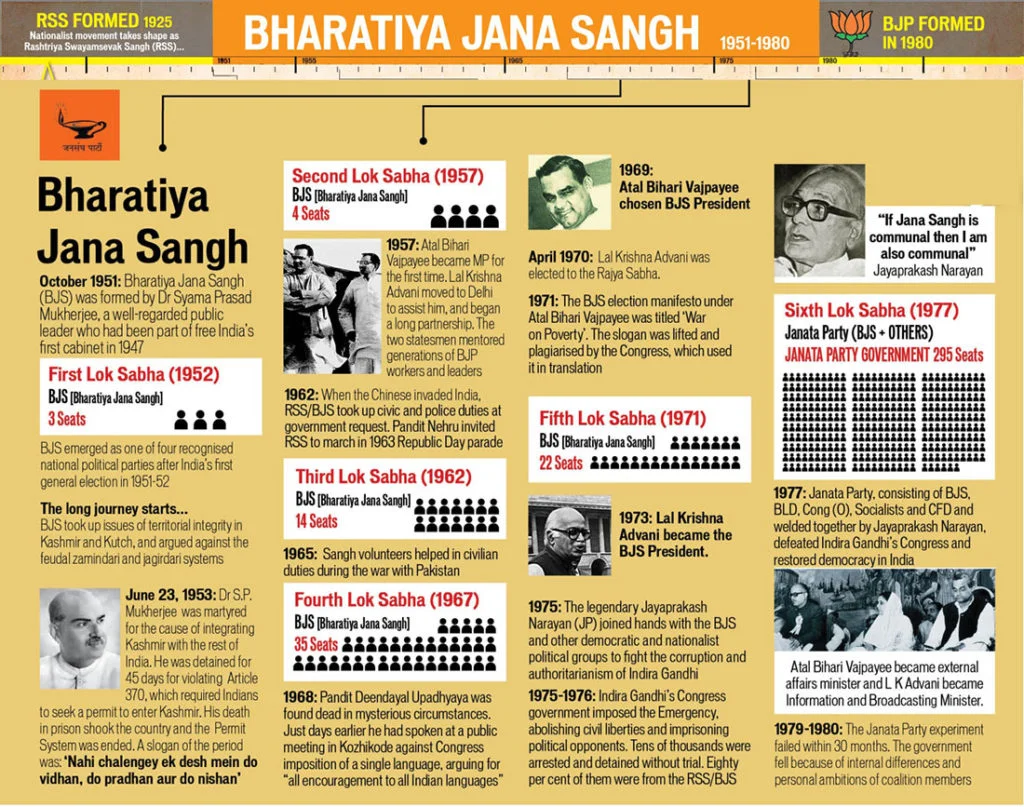
The BJS was established on October 21, 1951, in Delhi with Dr. Syama Prasad Mookerjee as its first president. In the 1951-52 general elections it won 3 seats in Parliament. The party later participated in the Kashmir agitation, Goa Liberation movement, and expanded its Lok Sabha presence through the 1957, 1962, and 1967 elections.
The Merger
In 1977, the Bharatiya Jana Sangh merged with several other political parties to form the Janata Party, a coalition aimed at opposing the Indian National Congress after the Emergency period. The Janata Party emerged as the largest party in the 1977 general elections.
Formation and Early Years (1980-1989)
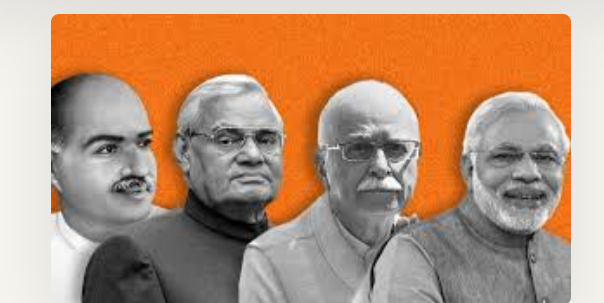
In 1980, former BJS members formed the Bharatiya Janata Party under the leadership of Atal Bihari Vajpayee and Lal Krishna Advani. The party promoted cultural nationalism and gradually gained electoral traction.
Rise to Power and Resurgence
The BJP became a major force in the 1990s, formed governments as part of the NDA under Atal Bihari Vajpayee, and later won historic mandates in 2014 and 2019 under Narendra Modi's leadership.